Off-Road Vehicles / 4 min read
Subaru Crosstrek Wilderness Off-Road Field Guide
Prepare a 2025 Subaru Crosstrek Wilderness for gravel and forest roads. Check touchscreen X-MODE, ground clearance, the temporary spare and roof cargo.
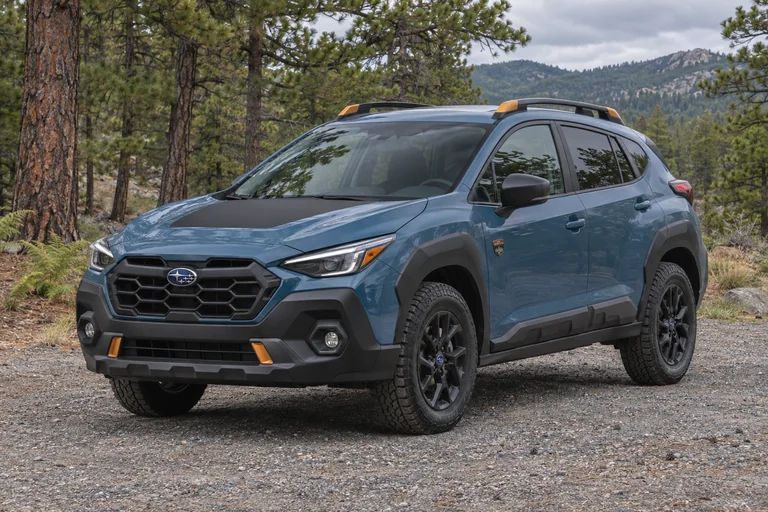
Identify the 2025 Wilderness setup
The U.S. 2025 Crosstrek Wilderness uses a 2.5-liter BOXER engine, Symmetrical All-Wheel Drive and a Lineartronic CVT. Subaru lists 225/60 R17 all-terrain tires and 9.3 inches of ground clearance at base curb weight. Inspect the tires and any underbody protection on the vehicle you have before relying on that clearance.
Confirm the Wilderness trim and look for the original raised rails with copper-finish accents. Check whether the vehicle has the optional power moonroof or any replacement roof hardware before using a rack fit listing.
Find X-MODE on the center display
While parked, locate dual-function X-MODE on the touchscreen. The display offers Normal, Snow/Dirt and Deep Snow/Mud. Read the owner’s manual for operating conditions and the Hill Descent Control indicator before you need either feature.
Choose a maintained route with room to turn around. Look at the depth of ruts and the height of the center ridge before entering a rough section. Turn back early when a washout or water hides the surface you need to drive on.
Make room to reach the temporary spare
- Subaru’s U.S. specification lists a temporary-use T145/80 D17 spare for this trim. Check what is under the cargo floor, its pressure and whether you can reach the jack and wheel tools with the vehicle packed. Read the manual for temporary-spare restrictions.
- Verify cold tire pressures against the vehicle’s placard and look for damage before leaving pavement. Save the route offline and tell someone when you expect to return.
- Secure heavy gear low in the cargo area. Plan a safe stop to check the tires and wheel wells after the route, then confirm your driving mode before continuing on pavement.
Check roof cargo before ordering a rack
Choose a rack designed to attach to the original raised rails. Count the bars or platform, mounting hardware and carriers in the roof load. The fitment guide lists the exact parts and the limits to check while driving and when parked.
With the proposed carrier position in mind, check that the rear hatch will clear longer cargo and account for the roof antenna. Measure the loaded height before driving into a garage or passing under low branches.
Sources & further reading
These sources support the factual reference points in this guide. Practical comparisons and packing suggestions are editorial guidance.