Off-Road Vehicles / 4 min read
Chevrolet Silverado 1500 Off-Road Field Guide
Check your Silverado 1500’s transfer case, differential and bed mounts before an easy trail day. Includes U.S. 2024 LT, LT Trail Boss and ZR2 examples.
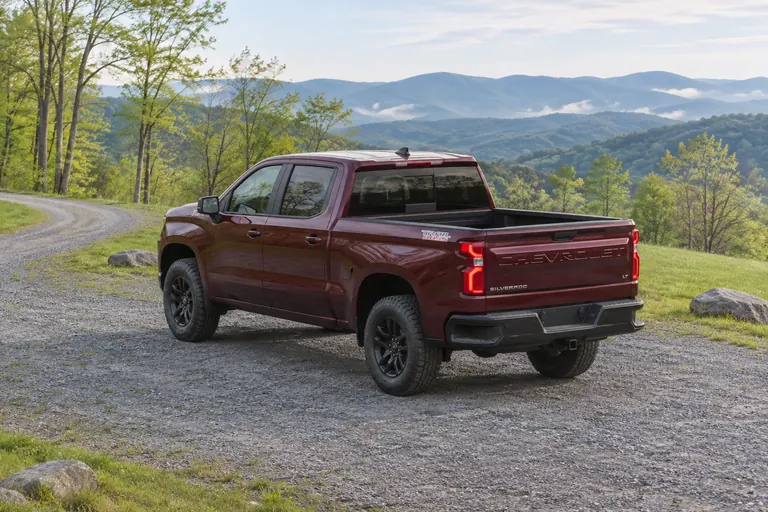
Identify your Silverado 1500
Record the model year, trim, engine, cab, drivetrain and box length. Check the build sheet for the transfer case and off-road equipment. The 2024 Crew Cab came with short and standard boxes, so confirm the box length before ordering a rack.
What varies on a 2024 U.S. Silverado 1500
Chevrolet’s manual explains 2WD, 4HI and AUTO for equipped trucks. The two-speed transfer case adds 4LOW. Match the procedure to your controls and check the instrument display to confirm a shift has finished.
- LT 4WD. Chevrolet lists an automatic locking rear axle. Look at the selector and build sheet to identify which transfer case is installed, then read the matching instructions in the owner’s manual.
- LT Trail Boss. Chevrolet’s LT Trail Boss build information lists a two-speed Autotrac transfer case, an automatic locking rear differential, a 2-inch factory lift and the Z71 Off-Road Package with skid plates and Hill Descent Control.
- ZR2. Chevrolet lists Multimatic DSSV dampers and selectable electronic front and rear lockers. Learn when each locker can be used and check that your truck has room to clear the route at its widest points.
Prepare for an easy trail day
- Ask the land manager about access, weather and washouts. Allow room for mirrors, wheelbase and rear overhang. Find a turnaround before a narrow section and inspect sharp dips or crests from a safe spot.
- Locate the jack, spare-tire tools and under-bed spare before loading. Check that cargo or hitch equipment still leaves room to lower and retrieve the spare.
- Use the driver-door loading label and owner’s manual to account for passengers, the rack, cargo and any trailer tongue weight. Keep heavy items low in the box and secure them to appropriate anchors.
- Before pavement, stop somewhere safe to inspect tires, the visible underside and straps. Follow the manual to return to the appropriate road settings.
Check the bed rails and stake pockets
- Inspect the stake-pocket openings, the lip under each bed rail and the bed corners near the tailgate. A rack may use one of those points or a combination of them. Check what your cover, liner or bed-wall storage blocks.
- Test the full range of the tailgate, including the inner gate if equipped with Multi-Flex. Check access to the bed anchors and visibility from any bed camera and the high-mounted brake light with the rack and cargo in place.
Sources & further reading
These sources support the factual reference points in this guide. Practical comparisons and packing suggestions are editorial guidance.