Off-Road Vehicles / 4 min read
Toyota Tacoma Off-Road Field Guide
Identify your Tacoma’s cab, bed, drivetrain, and load limits before your first off-road day. U.S. examples show how the 2023 and 2024 models differ.
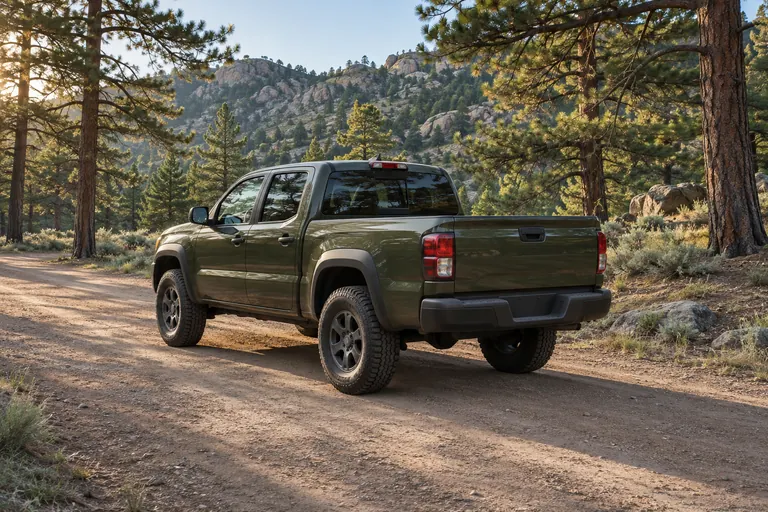
Identify your truck
Start with the model year and Toyota’s original vehicle documentation for your VIN. Write down the trim, cab, bed length, drivetrain and powertrain. On a used truck, also record changes to the wheels, suspension, bumpers or bed rails. Those parts may differ from the original equipment list.
Toyota offered Access Cab and Double Cab configurations in the U.S. for 2023. The 2024 redesign introduced XtraCab alongside Double Cab. Check the application across that model-year change, especially for racks, tonneau covers and other parts that mount to the body or bed.
What varies on the 2024 Tacoma
These are U.S. factory examples from Toyota’s 2024 brochure. Check your own truck’s equipment and use the owner’s manual for its drive modes and their operating limits.
- TRD PreRunner comes with rear-wheel drive, a locking rear differential and a 6-foot bed in XtraCab form.
- TRD Off-Road comes with part-time four-wheel drive and a locking rear differential. The i-FORCE MAX TRD Off-Road comes as a Double Cab with a 5-foot bed.
- Limited pairs the gas i-FORCE engine with part-time four-wheel drive and the i-FORCE MAX hybrid with full-time four-wheel drive.
Before you leave pavement
- Choose an open, permitted route with a maintained surface and room to turn around. Confirm road conditions with the land manager, save the route offline and share your return time. Turn back if weather or the surface changes beyond what you planned for.
- Check tire condition and cold pressures against the truck’s placard for the original tire setup. Check the spare and confirm the jack and wheel tools are present and usable. If tire size or load rating has changed, verify the setup with a qualified tire professional.
- Use your truck’s tire and loading label and owner’s manual for its limits. Account for passengers, gear and installed accessories, and secure the load to appropriate anchors. Include trailer tongue weight in your load plan if you tow.
- Identify manufacturer-approved recovery points for the method you would use. If you cannot verify the attachment point or perform the recovery safely, stop and arrange qualified help.
Check fit before buying gear
- For bed-mounted gear, match the exact part number to your model year, bed length and mounting system. Check for conflicts with the liner, cover or rails already installed, and measure the usable space with the tailgate and cover in their intended positions.
- For wheels, tires, suspension or recovery hardware, use the manufacturer’s application notes for the exact truck and disclose any modifications when confirming compatibility. Ask the manufacturer or a qualified installer to verify the combination before ordering if any requirement is unclear.
Sources & further reading
These sources support the factual reference points in this guide. Practical comparisons and packing suggestions are editorial guidance.