Storage / 5 min read
Weather-resistant storage: ratings, seals, and latches
Read the exact protection claim, inspect the closure system, and choose a case around the exposure and access your trip requires.
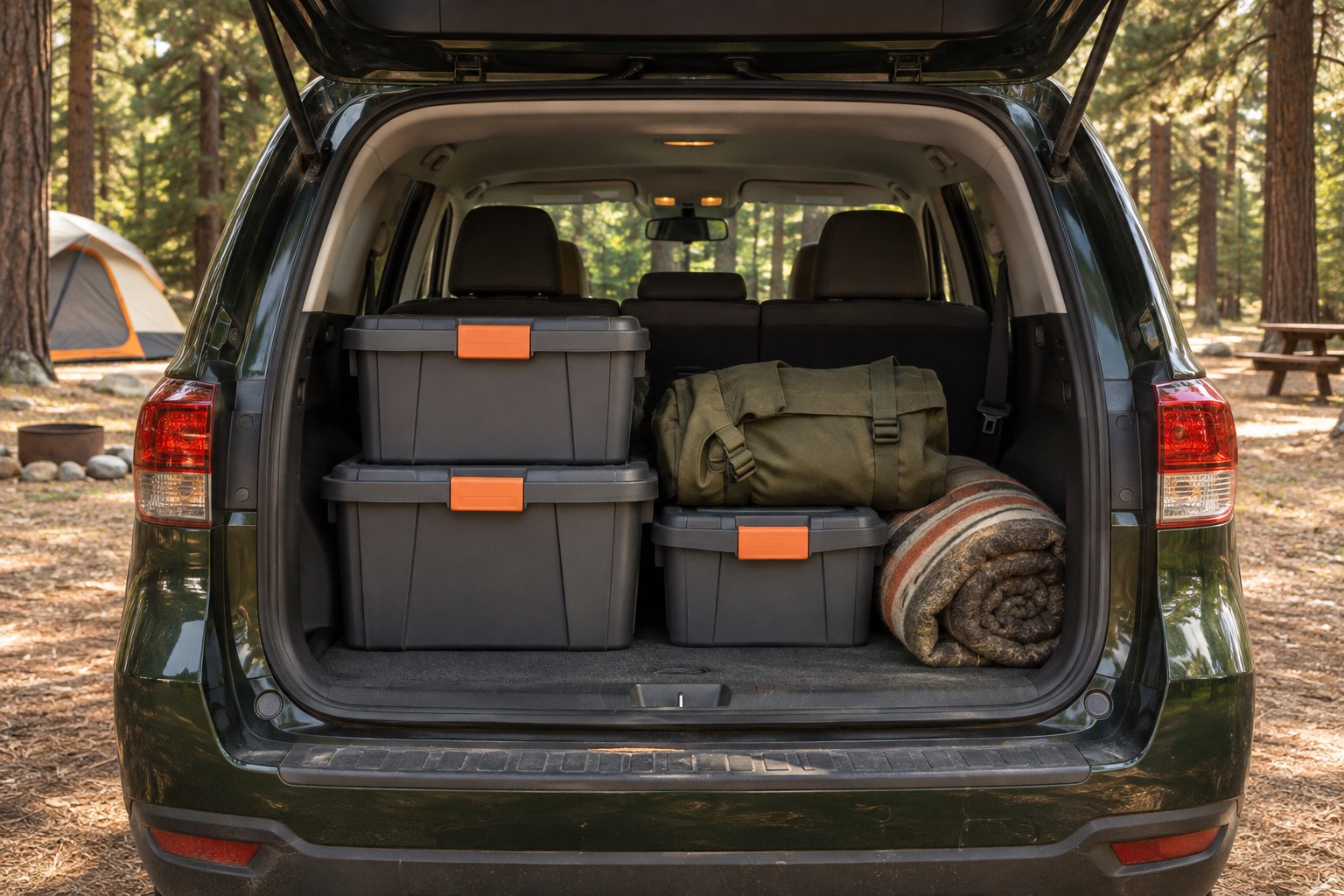
Describe the exposure before choosing the claim
A case carried inside a closed vehicle faces a different job from one repeatedly handled in a wet campsite. Write down where the equipment will travel, where the case will be opened, and what would happen if its contents became damp. Start with that situation rather than buying the strongest-sounding label. The right container should make the equipment accessible while meeting the documented conditions relevant to the trip.
Consider whether a separate protective pouch is appropriate for a particularly sensitive item, following that item's instructions. A larger outer case does not remove every handling risk once it is opened. Decide which contents should remain together and which should have their own protection. This guide compares documented case features and organizing choices. It does not establish a guaranteed protection system for electronics, medical supplies, or other unspecified sensitive equipment.
Read the manufacturer's exact words
Water-resistant, waterproof, and an identified IP rating are different descriptions. Record the exact claim for the exact model and read the accompanying explanation and care requirements. Do not upgrade a general gasket description into a rating. ROAM describes a dust/water-resistant seal for its 55L case; the reviewed documentation does not establish an IP rating for that product.
YETI states IP65 and IP67 ratings for its GoBox 15 and 30. Attribute those claims to the manufacturer rather than presenting them as our own testing. Ratings concern specified conditions; they are not a promise against every exposure, impact, modification, or damaged closure. Use the current instructions for the selected case and obtain clarification from the manufacturer if the expected conditions are not covered. A similar-looking case from the same brand should receive its own documentation check.
Understand the whole closure system
Look at the lid, gasket, hinges, latches, and any ports or attachment features as one system. A clean seal cannot close properly if an item or strap is trapped across the mating surface. Before closing the case, check that the lid can meet its intended position without force from overpacked contents. A lid that appears shut is not a reason to skip the manufacturer's closure routine.
After a trip, inspect accessible sealing surfaces and hardware according to the care instructions. Remove debris using approved methods and ask about damaged or worn parts rather than improvising a repair that could change performance. Do not drill a hole for an accessory or alter a seal and assume the original protection claim still applies. If a modification is important, obtain model-specific guidance before making the purchase or relying on the altered case.
Check opening access as carefully as closed protection
Protection while closed is only part of a useful storage routine. Think about where you will place the lid and how you will retrieve equipment when conditions are wet or dusty. A small arrival kit can reduce the number of times the larger equipment case needs to be opened. The GoBox 15 is one example to compare for a deliberately compact group of items, without assuming it fits a particular vehicle pocket.
An internal tray or pouch can help group items so that the case remains open for less time, but it also takes up space. Rehearse the arrangement with the actual contents. Keep the items needed on arrival accessible without stacking them so high that the lid presses on them. A case should close correctly when packed normally, not only when the equipment is arranged with unusual care that will be difficult to repeat after dark.
Compare useful space and loaded handling
Use internal dimensions to check the equipment and external dimensions to plan cargo placement. The two measurements answer different questions. ROAM's listed exterior axes use W by L by H; preserve that order when transferring them into a drawing. YETI's size-specific FAQ and its buying guide round some measurements differently, so the product records identify the source of the displayed values rather than combining them into invented precision.
Include the case and all organizers in the carrying weight. YETI separately lists weights with and without included accessories for the relevant sizes. A case that feels manageable empty can be awkward after it is filled. Rehearse a safe lifting and opening routine and follow the vehicle manual for cargo securement. A stackable lid or tie-down channel does not establish the suitability of a roof rack, mount, attachment point, or load arrangement on an unspecified vehicle.
Keep food-storage approval separate
A secure latch, protection rating, or lockable case does not by itself establish wildlife-resistant food storage. YETI explicitly distinguishes the GoBox from a cooler and does not identify it as bear-proof. Follow the destination's current food-storage rules and required facilities rather than treating a protective gear case as permission to store food anywhere in camp.
Compare the GoBox 15, GoBox 30, ROAM 55L, and Pelican BX50 through their individual product documentation. Choose according to the actual contents, permitted exposure, lifting routine, and available space. After the weekend, record where the kit was hard to access or awkward to repack. Address those practical problems before adding locks, mounts, or more capacity. A well-documented case is most useful when its limits and its everyday operating routine are both understood.
Purchase checklist
- Define expected exposure and the needs of the actual contents.
- Verify the exact manufacturer's claim and any stated conditions.
- Inspect how the lid, gasket, latches, and accessories work together.
- Compare internal space, external axes, organizers, and loaded weight.
- Verify vehicle securement and destination food-storage requirements separately.
Sources & further reading
These sources support the factual reference points in this guide. Practical comparisons and packing suggestions are editorial guidance.