Buying guide / 7 min read
Portable power: start with your devices
Understand capacity, output, and the complete charging setup before choosing a power station.
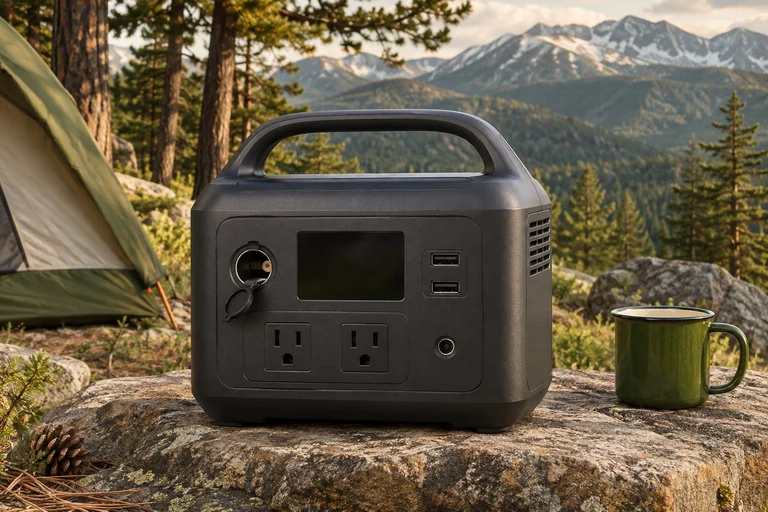
Start with a device list
List the equipment you intend to use at camp and how you intend to use it. Charging a phone once, charging several camera batteries, and running refrigeration are different jobs. Write down the charging connections and documented requirements of your devices before comparing batteries.
Also decide what can be charged before departure and what must work away from the vehicle. That distinction can reduce the amount of equipment you need. A new power station is useful when it solves a defined problem; its capacity label alone does not explain whether it suits your weekend.
Separate capacity from output
Watt-hours describe stored energy. Watts describe a rate of power delivery. A station can have enough stored energy for a task while lacking the output capability the device requires, or enough output capability but insufficient usable energy for the duration you want.
Compare the device’s running and starting requirements with the exact output specifications. AC, USB-C, and vehicle-style DC outputs can have different limits, and combined-output restrictions may apply. Do not treat a surge or special boost-mode claim as the ordinary continuous rating.
Treat runtime as conditional
Rated capacity is not all available at a connected AC device. Conversion losses, the station’s own operation, temperature, and device behavior affect the result. Intermittent loads, such as compressor refrigeration, add further variation.
Manufacturer runtime examples can provide context when their assumptions match your intended use, but they are not our test results or a promise. Read the stated conditions and verify your actual setup before relying on it during a trip. This launch catalog publishes specifications rather than estimated operating hours.
Include the charging equipment
Decide how the station will be recharged between uses. Then check which leads, adapters, or panels the exact listing includes. A photograph showing a solar panel does not establish that it is part of the chosen bundle or electrically compatible with a different station.
Solar compatibility requires the permitted electrical ranges and connector information in the manufacturer’s documentation. Do not infer it from a shared plug shape or a panel’s advertised wattage. Vehicle charging also needs the specified equipment and an arrangement supported by the relevant manuals.
Check packing and operating conditions
Compare the station’s complete dimensions and weight with your cargo arrangement. Read the ventilation, moisture, and temperature restrictions before deciding where it will operate. A power station that fits in a closed container is not necessarily permitted to operate there.
Confirm the exact regional model and revision. Outlet type, supply voltage, included leads, battery chemistry, and warranty coverage may differ even when the product name is similar. The Jackery Explorer 300 manufacturer page, for example, mixes a newer 292 Wh headline with older 293 Wh content; check the selected unit rather than combining specifications from different revisions.
Make a shortlist around your requirements
Choose two or three products in the power category and use the comparison tool to review documented capacity, rated output, weight, and any available dimensions. An undocumented value remains a question to resolve, not evidence that a product has an advantage.
Review the full purchase checks on each product page and open the manufacturer sources. Check current retailer prices and bundle contents directly. Make the final choice around the requirements you can document, leaving room to change your approach after learning from a real weekend.
Sources & further reading
These sources support the factual reference points in this guide. Practical comparisons and packing suggestions are editorial guidance.