Gear matchups / 7 min read
Cooler or powered fridge?
Compare the whole setup: food space, ice, power, carrying effort, and the way you actually camp.
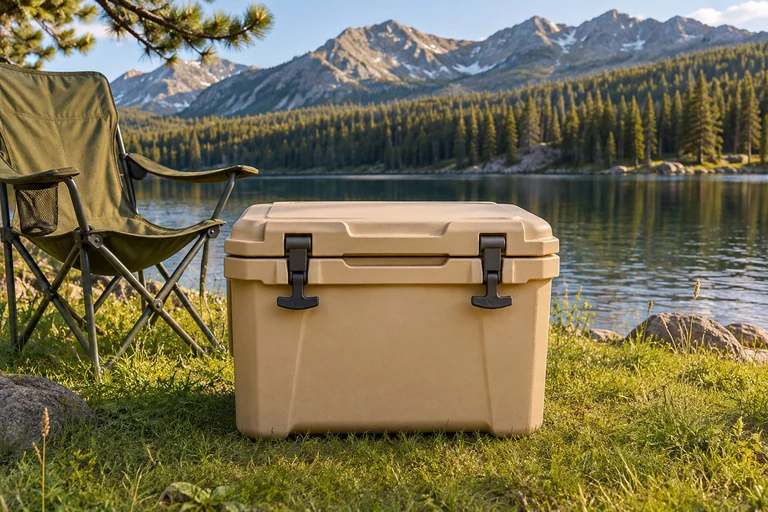
Compare the whole system
An ice cooler and a powered fridge solve the same broad problem with different support equipment. An ice cooler needs a suitable cold source and space for it. A powered fridge needs a suitable supply, correct cables, and the clearances and operating conditions in its manual.
The useful question is which complete arrangement suits your trip. Put the two packing lists beside each other before comparing products. Include the food plan, how you will keep perishables at an appropriate temperature, and what happens if the cold source or power supply is no longer sufficient.
When an ice cooler makes sense
An ice cooler can be a straightforward starting point for a short trip where obtaining and replenishing ice is practical. You can evaluate it without adding an electrical system. The key compromises are space occupied by the cold source and the need to manage meltwater and food packaging.
Check external dimensions, empty weight, lid access, and the space left after adding food and ice. A model name that includes a number does not necessarily state its volume. A can-only capacity is also different from a real food load.
- Check: cold-source availability, food containers, thermometer, loaded lifting effort, and restraint.
- Optional extras: baskets and dividers, after confirming what the selected listing includes.
When powered refrigeration is worth evaluating
A compressor fridge gives you a different storage arrangement because it does not rely on a load of ice inside the food compartment. That can be useful for repeat trips, but it adds a continuous energy requirement and more equipment to plan around.
Read the exact manual before choosing a location. The case footprint does not include every ventilation or cable requirement. Confirm the supply voltage, connector, battery protection settings, and operating conditions. If an installation is needed, follow the manufacturer’s requirements rather than adapting a generic online diagram.
Make the power plan explicit
A battery capacity label is not a runtime guarantee. Fridge consumption changes with the temperature around it, its setpoint, the contents, openings, and the specific model. The supply also has its own losses and limitations.
Use manufacturer documentation to define an initial plan and verify the behavior of your actual setup before relying on it away from alternatives. A vehicle battery protection feature does not guarantee that your engine will start after running the fridge. This guide does not calculate or promise a runtime.
Compare costs and food handling separately
For each option, write down the main item, required accessories, restraint, power or cold source, and recurring supplies. Then check the current merchant listings. Our catalog deliberately omits prices when we cannot maintain current, comparable offers.
Food safety is a separate responsibility from the purchase. Use an appropriate thermometer, follow current USDA guidance, and follow local wildlife-storage rules. A cold-feeling interior or a digital setpoint is not, by itself, proof of the actual food temperature.
Choose for your next real weekend
For a simple first overnight, work out whether an ice-based arrangement meets your needs before adding an electrical commitment. For recurring trips, compare the inconvenience you actually experience with the additional equipment a fridge would require.
Use our side-by-side product comparison to check published specifications, then open the source links for the exact models. Leave undecided fields undecided until you have the missing information. Neither approach is universally best; the useful choice is the one whose requirements you can meet.
Sources & further reading
These sources support the factual reference points in this guide. Practical comparisons and packing suggestions are editorial guidance.