Compact setups / 6 min read
Small vehicle, smart setup
A removable camping setup that respects the space and everyday uses of a smaller vehicle.
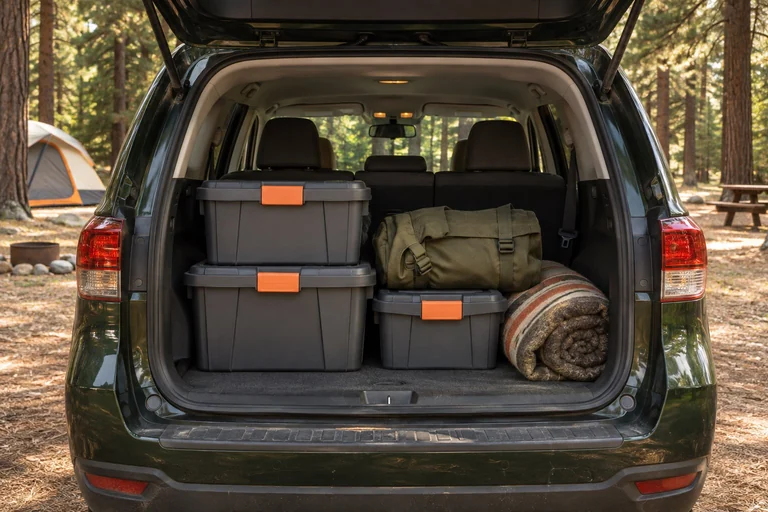
Measure the space you can actually use
Start with the seats in the positions needed for the trip. Measure the cargo opening as well as the floor, then check where the hatch slopes inward. A box can fit on the floor and still prevent the hatch from closing. Photographs of someone else’s vehicle do not establish fit in yours.
Use cardboard outlines or the containers you already own to explore arrangements. Leave room to reach items, open lids, and retrieve things at a roadside stop. A setup that uses every available inch can become difficult to live with after the first unpacking.
Choose a few removable modules
Separate the sleeping kit, kitchen, and loose accessories into manageable groups. Smaller modules let you move one group at a time and restore the vehicle for daily use. Choose container size around the job rather than a desire for every box to match.
Compare internal measurements with the objects you need to carry. Thick walls, taper, and handles can make the usable space much smaller than the exterior suggests. The number in a product name may describe a model series rather than a measured capacity.
Simplify the kitchen and cold storage
Let a short menu determine the cookware. Measure the complete cooler footprint and check lid access in the intended position. If you choose powered refrigeration, also allow the ventilation and cable clearances specified by the exact manual.
Evaluate the equipment as a system: cooler plus ice, or fridge plus supply, leads, and restraint. Comparing only the main boxes hides part of the space commitment. Do not choose a power station solely because its case fits beside the fridge.
Use soft space thoughtfully
Soft bags can adapt to awkward corners, while rigid containers can organize items that need more structure. Keep heavy or delicate equipment in an arrangement supported by the owner’s manual and appropriate restraint guidance. Do not assume a soft bag offers impact protection.
Keep frequently used equipment near an accessible opening. Place infrequently used camp items where they can remain until arrival. A consistent place for each group is more valuable than a complex arrangement that only one person can repack.
Treat load limits as a separate check
Available room and allowable load are different questions. Include passengers, accessories, and the packed equipment when checking the requirements in your vehicle’s documentation. Do not use a roof rack as an automatic answer to a full trunk.
Roof carrying, towing, and installed accessories each introduce their own limits and compatibility requirements. This guide does not establish those values or provide installation instructions. Consult the vehicle and equipment manufacturers for the exact configuration.
Keep the everyday changeover easy
Practice removing the camping modules and returning the car to its normal use. If the process is cumbersome, try fewer or smaller containers before committing to permanent drawers. Store the packing list with the equipment so the next departure begins from a known arrangement.
Review the setup after a real overnight. Mark the items you used, the ones you could not reach, and the awkward gaps that mattered. The next improvement may be a different container or a shorter equipment list rather than a larger vehicle.
Sources & further reading
These sources support the factual reference points in this guide. Practical comparisons and packing suggestions are editorial guidance.