Coolers and refrigeration / 5 min read
What size cooler do you need for one night?
Use a trial pack of your food and ice to decide whether a tall personal cooler, a wider hard cooler, or a separate drinks cooler makes sense.
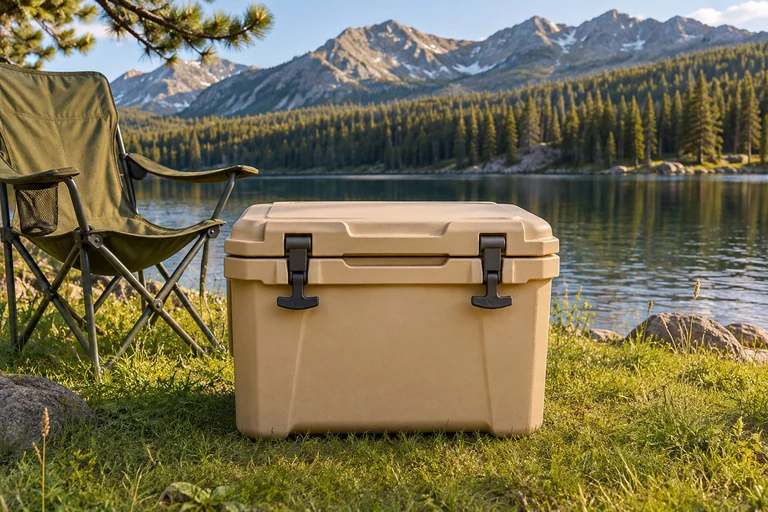
Measure height and width separately
A tall box can take up less floor space while still being awkward for a wide container. YETI lists the current Roadie 24 at 16.6 inches wide and 14 inches deep outside, with an interior footprint of 10.8 by 8.1 inches and 13.4 inches of internal height. It is a sensible shape to investigate for tall drinks or narrow containers. If your dinner tray is wider than the opening, turn it only if the contents can travel that way.
The YETI Tundra 35 has a broader exterior footprint and a lower listed height than the Roadie 24. At 21.4 lb empty it also starts heavier. The RTIC 52 QT Ultra-Light gives you a published interior footprint of 21.25 by 12 inches if broad meal boxes are the deciding factor. Its advertised can count excludes ice. Use your food and ice layout to judge that space.
Decide how often people will open it
A drinks cooler makes sense when several people will reach for it all afternoon. That keeps the food cooler closed more often, an approach the FDA also recommends. Try the extra cooler with the same parking and carrying plan: two boxes can be easier to lift individually, but they need more floor space and separate ice.
For a quiet overnight, one cooler can be simpler. Put the first meal within reach and move beverages you do not need cold out of the box. Keep the thermometer where it can be read easily. The goal is to get what you need quickly and shut the lid.
Check the temperature during the trip
Start with chilled perishables, enough ice or frozen cold packs, and a cooler thermometer. Follow the FDA guidance to keep cold perishable food at 40 °F or below. Treat a manufacturer’s ice-retention claim as a description of its conditions. A hot vehicle, frequent openings, and warm items added at camp change the situation.
Plan a convenient ice stop or a shelf-stable backup meal if your setup depends on refilling ice. Check the thermometer at arrival and before serving. If the cold chain has failed or the time out of safe temperatures is unknown, consult the FDA’s time and temperature guidance and use the backup meal when you cannot confirm safety.
Check the lid and the loaded carry
Measure the floor area with the rest of the trip gear in place, and confirm there is room to open the lid under the hatch or bed cover. Try the carry path from the vehicle to the picnic table with a typical load. Published empty weight leaves out ice, food, and drinks, which can change whether one person can manage the lift.
Check how you will deal with meltwater. The updated Roadie 24 includes a drain plug and the carry strap. Look for both in the specific listing. A basket takes up some interior space and is a separate purchase on the Roadie, so include it in the trial layout if it matters to your packing plan.
Purchase checklist
Pick the cooler you can load and open with the rest of the vehicle packed. When two sizes both work, use your real carrying distance and access needs to decide.
- Trial-pack the meals, containers, thermometer, and ice you expect to use.
- Measure the usable interior and the space needed to open the lid in the vehicle.
- Check the drain and included accessories on the exact version.
- Decide whether drinks warrant a separate cooler and whether you can replenish ice.
- Make a plan to check temperatures and handle perishables if cold holding fails.
Sources & further reading
These sources support the factual reference points in this guide. Practical comparisons and packing suggestions are editorial guidance.