Gear matchups / 6 min read
Choosing storage for a daily driver
Removable bins, cargo cases, or drawers: choose around access, measurements, and everyday use.
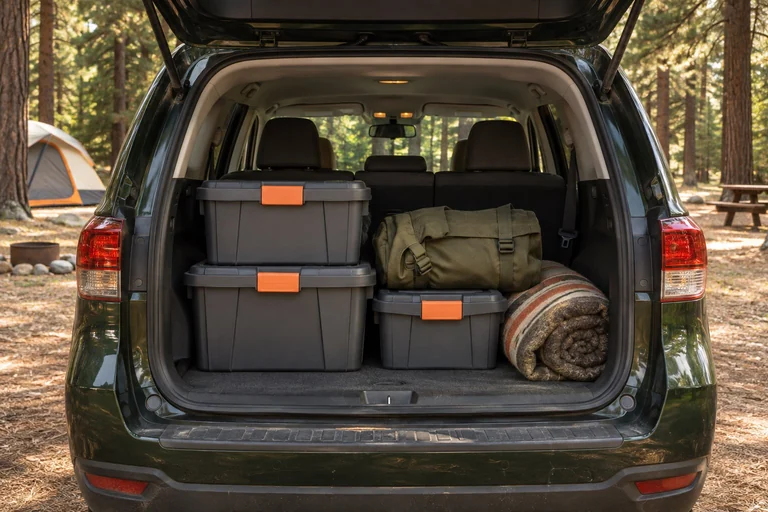
Give each container a job
Start by grouping the equipment you own. A kitchen kit, a shelter bag, and a collection of small charging accessories need different kinds of organization. Choose storage to support those groups rather than buying a matching stack and finding things to fill it.
Write down how the vehicle is used between trips. If seats, cargo space, or a spare-wheel compartment need to remain accessible, record those constraints before comparing systems. A daily driver benefits from a packing arrangement you can remove and restore without a major project.
Compare removable bins with installed drawers
Removable bins offer a simple way to take a group of equipment into camp or leave it at home. You can rearrange the load as your habits change. The compromise is that reaching one container can require moving another, especially in a tightly packed cargo area.
Drawers can offer organized access, but their structure, weight, dimensions, installation, and effect on everyday cargo use must all be evaluated. Do not assume a drawer system fits because it is pictured in a similar vehicle. Installed systems require verified application and mounting information.
Check the inside and the outside
Compare exterior measurements with the cargo opening, floor, and hatch profile. Then compare the interior measurements with the equipment. A tapered container or thick-walled case can consume more vehicle space than its usable interior suggests.
Include room for handles, latches, and lid movement. Manufacturer parcel dimensions describe shipping packaging, not necessarily the product. Our catalog keeps undocumented measurements unknown rather than substituting parcel measurements or inferring volume from a model name.
Read protection claims precisely
A latched lid, a weather-resistant case, and a rated waterproof container are different claims. Read the manufacturer’s definition and conditions for the exact model. Choose internal packaging for sensitive items based on what is actually documented.
Locks can deter casual access, but a lockable box is not automatically approved for wildlife-resistant food storage. Check the destination’s rules and any required certification or closure hardware. The same care applies to claims about stacking: verify the exact model and generation.
Plan restraint and handling separately
A container sitting neatly in the trunk still needs an appropriate transport arrangement. Tie-down points on a box do not verify the capacity of a vehicle anchor or the compatibility of an accessory mount. Consult the equipment and vehicle documentation for the intended arrangement.
Pack a container before judging whether it is a convenient size. Empty weight is only part of the lifting effort. If a module is awkward when full, split the contents into smaller groups. The easier packing system is often the one that people can handle and identify consistently.
Test the complete routine
Rehearse retrieving the items you use most, opening the cooler, accessing necessary vehicle equipment, and unpacking the campsite. Check the return packing arrangement too: wet gear and partly used food can change the load.
Begin with the simplest reversible arrangement that meets your needs. After several trips, specific access problems will tell you whether different bins or an installed system would help. Compare products by the problem they solve, then confirm every measurement and required accessory before ordering.
Sources & further reading
These sources support the factual reference points in this guide. Practical comparisons and packing suggestions are editorial guidance.