Weekend ready / 5 min read
Booking a campground without surprises
Check campsite type, vehicle and tent space, arrival rules, fees and cancellation conditions before committing to a camping reservation.
Choose the right kind of reservation
Begin with the activity and overnight accommodation you intend to use. A park entrance pass, timed-entry reservation, campsite booking and backcountry permit can serve different purposes. Read the official destination page to identify what is required for your exact trip rather than assuming that one confirmation covers everything. Follow links from the land manager or official reservation system, and check the location name carefully before entering payment details. Similar campground names and photographs can conceal very different access and facilities.
Decide whether you need a drive-in tent site, a walk-in site or another supported arrangement. A walk-in designation can change how much equipment you can comfortably carry from the vehicle, even when the campground is close to a road. Look for the specific site description, map and published restrictions rather than relying only on a general campground description. Save the relevant documents and contact details so that the booking can be checked without needing to remember which page contained a particular condition.
Measure the equipment that must fit
Record the dimensions of the tent with its rainfly and needed guyline space, the parked vehicle and any attached rack or carrier. The existing Coleman Sundome 4 is a tent example whose nominal occupant count does not establish that it fits every tent pad or leaves adequate room for your bedding. Consider the access path and space for opening doors as well as the rectangle occupied by the equipment. If a site diagram is unclear, ask the campground about the actual restrictions before booking.
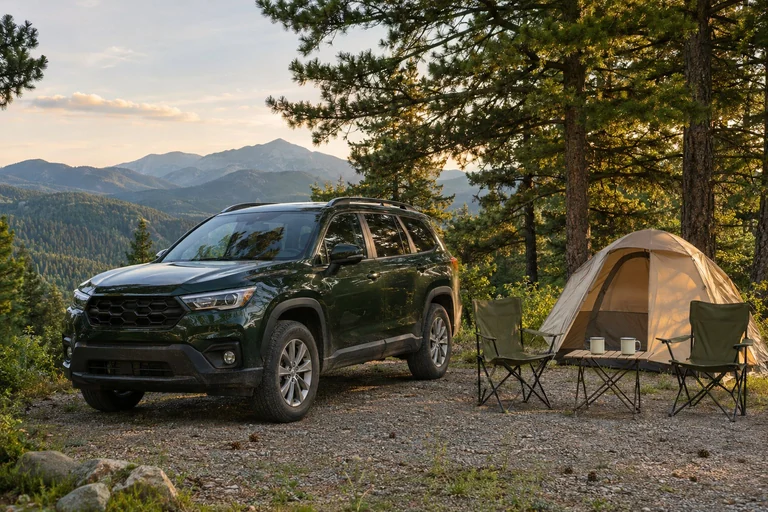
Check vehicle counts, trailer limits, parking arrangements and the number of people permitted at the site. These conditions vary, so do not infer a universal allowance from a previous trip. A group may need a designated group site or several confirmed sites, while extra visitors can have separate requirements. Make a simple scaled sketch when a large tent and loaded SUV must share a small area. This can reveal a problem before you spend money or arrive with equipment that cannot be placed within the assigned boundaries.
Verify facilities and complete trip costs
List which services the group is relying on: potable water, toilets, showers, electricity, accessible routes, food storage and waste disposal. A symbol on a map is not a guarantee that a seasonal facility is operating during your dates. Check current notices and ask about anything essential to a participant’s needs. If water must be carried, include the filled weight and transport arrangement in your plan. If electrical service matters, confirm the exact supply before buying cords or assuming an RV-style pedestal accepts your equipment.
Read the cost and payment information for the actual reservation, including any clearly identified additional vehicle, visitor or service charges. Avoid quoting a generic campground fee as the final trip cost. Compare the value of a suitable nearby site with one that adds a long approach, extra transport or missing services. An inexpensive booking can require more carried equipment, but a higher fee does not prove better fit. Keep the comparison practical: what does the group need, what is provided, and what must you arrange yourself?
Read arrival and cancellation terms before paying
Check the booking window, minimum stay if any, check-in and check-out times, and what happens if you arrive after the staffed period. Gate access and late-arrival rules are particularly important when a Friday drive can run long. Ask how to find the assigned site without disturbing occupied spaces, and retain any permitted access instructions privately. Do not publish gate codes in a shared public packing list or assume that somebody else at the campground will be available to solve an arrival problem.
Recreation.gov explains that location-specific policies can supersede general policies. Read the terms shown for the selected location and dates, including cancellation, changes, no-shows and payment conditions. This guide does not reproduce a universal fee or deadline because the relevant booking must be checked directly. Decide on a practical final weather and travel review before the commitment becomes harder to change. Save confirmation information offline and ensure that the reservation holder will be present or that any permitted transfer process has been completed.
Keep a small offline arrival packet
Put the confirmation, official directions, campground map, contact details and important conditions somewhere reachable from the front seat. The Rite in the Rain No. 135 is an optional notebook example for non-sensitive notes; it still needs a suitable writing instrument and is not required to make a reservation. Ordinary printed pages can be enough. A Plano small trunk can organize a compact camp kit, but it is unnecessary for protecting a few documents and does not establish waterproof or approved wildlife-resistant storage.
Recheck alerts shortly before departure and keep a realistic alternative if access or conditions change. Share the arrival plan with the group, including which vehicle carries essential shared equipment. After the trip, update your notes with what the specific site actually provided without presenting one visit as proof of future conditions. The linked equipment is offered as research context, not as a booking requirement. A useful reservation process ends with a site that accommodates your real setup and a plan you can follow even when mobile service disappears.
- Distinguish entry passes, campsite reservations and any separate permits.
- Match the actual shelter, vehicle, people and parking to the selected site.
- Confirm essential facilities and current seasonal notices.
- Read location-specific arrival, change, cancellation and no-show terms.
- Save official directions and confirmation details offline; retain a backup plan.
Sources & further reading
These sources support the factual reference points in this guide. Practical comparisons and packing suggestions are editorial guidance.